


Standing in the toy and picture book-strewn dining room, I stared out our third-floor apartment window. The sun cast a shadow across the rocky, empty lot across the alley. Unsettledness crept across my heart.
How do I teach my preschooler and toddler to follow Jesus?
Discipleship felt like such a daunting task—even though I was the children’s ministry coordinator for my city church.
I wasn’t more qualified than anyone else, but my job description involved encouraging parents in our church to teach their kids how to follow Jesus.
I couldn’t come alongside other parents if I wasn’t doing it myself.
God gave me two kids, and it was my role as a parent to point them to Jesus.
So I embarked on a journey to figure out what intentionally training my kids to follow God looks like for my family.
Almost a decade later, it’s still a learning curve to coach my kids in following Jesus through the different ages. But I’m convinced that teaching the next generation about God’s faithfulness means laying a biblical foundation before the teenage years arrive.
A Biblical Worldview
Only eight percent of American kids (ages 13 and under) from Christian families possess a biblical worldview. This statistic is startling, yet also serves as an exhortation to parents, grandparents, aunts, and uncles.
We have an essential role to play in training the next generation to follow God and helping the children around us develop a biblical worldview.
Children’s worldviews begin to form around 15 months old and finish by age 13. This means we have a limited window to instill key elements of the faith into our kids.
This needn’t spark fear but should spur us to focus on what matters to ensure we lay the right spiritual foundation for our kids.
Raising the next generation to know and love Jesus is important, but, like I once did, many parents may not feel equipped to do so. While biblical truths ground us in the ways of the Lord, it can sometimes be tricky to find ways to walk out these truths.

7 Practical Ways to Cultivate Faith in Children
Here are some practical ways we can teach the next generation about God’s faithfulness:
1 – Recount the stories of God from the Bible and our own lives (Ps 145:4).
The next generation needs to hear and read the true stories of God throughout the Bible. We can teach our kids that what God faithfully did for the Israelites, Ruth, or in the book of Acts, He also did for us because we’re part of the family of God.
We can also make a habit of sharing the different ways God has worked in our lives with kids.
2 – Treasure Scripture (Dt 6:7).
We show our kids the incredible beauty and value of Scripture by how we obey God’s Word and seek it out throughout our days. We use the Bible to guide our decisions, thoughts, actions, and direct our prayers.
Our kids should see us regularly spending time with Jesus and finding ways to pull the Word into the rhythms of our days.
3 – Model setting our hope in God (Ps 78:5–7).
In addition to regular Bible reading and prayer, we can model the necessity of remembering God’s faithfulness by prioritizing biblical community. The weekly gatherings of God’s people are a special time that can’t be replicated elsewhere and are a key aspect of our faith as the body of Christ (Hb 10:25).
We can establish a community of believers who keep us accountable to obey Scripture, encourage us in our faith, and remind us to place our hope in Christ rather than the fleeting things of this world.
When the next generation sees believers gathering to worship Jesus and spur one another toward faith in Christ each week, it sparks deeper trust in the Lord and lays a firm foundation of hope in God alone.
4 – Practice Oral Bible Storying.
Utilize this simple technique used around the world to pass along God’s Word in non-literate cultures. Kids tend to be great oral learners. Plus, it allows us to hide Scripture in our hearts.
Select a story or parable from the Gospels (Matthew, Mark, Luke, or John) and work on memorizing it by reading the passage aloud once (or twice). Then take turns retelling it verbally without looking at the text. (Others can help fill in missing gaps as needed!) This is a great activity for ages 3 and up.
5 – Unpack God’s global greatness.
From Genesis to Revelation, Scripture tells the story of how God desires all nations to know and worship Him. Our God isn’t just for Americans; He’s so great that all peoples around the globe should worship Him (Isa. 49:6).
Pray for the gospel to reach places where Jesus isn’t known and praised. Find pockets of time to naturally weave these moments of intercession into your day or week—on the way to school or a sports practice, before bed, during Sunday lunch, or on a neighborhood walk.
Resources like The Daily Grace Co.’s Around the World: Letters from Children Across the Nations or the Joshua Project’s Unreached People Group of the Day prayer prompts are good starting points for developing weekly or daily prayer for the world as a family.
6 – Equip kids to read and study God’s Word.
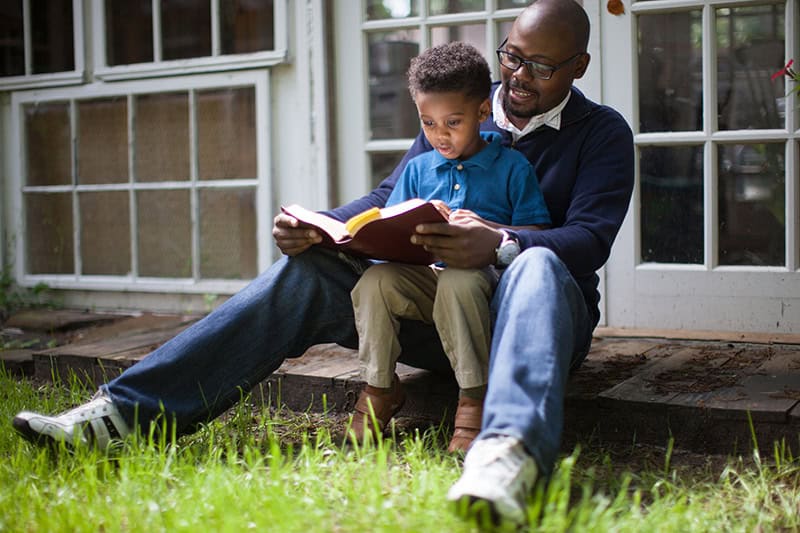
The Bible is living and active (Heb 4:12) and can speak to young hearts just as easily as adult hearts. We can equip our kids to study the Bible for themselves in simple ways, and it’s not as complicated as we may think.
Grab a notebook, pen, and a version of the Bible well-suited for youth. Point your kid to one of the Gospels (Matthew, Mark, Luke, or John) and encourage him to read a section of Scripture. Then have him answer three questions:
- What’s going on in the text?
- What does it teach me about God?
- How should I respond?
Let’s train our youth to read the Bible and interact directly with the Lord.
7 – Listen to the testimonies of other believers together.
Invite other Christians over for a meal and ask them to share their story of God’s faithfulness in their lives. Or consider subscribing to one of your church’s missionaries’ newsletters and track with the stories they share about God’s provision and work in another culture.
This extends the scope beyond our families so kids can catch a glimpse of God’s faithfulness in bigger ways.
Instill Truth and Trust God
Let’s intentionally invest in the spiritual lives of kids during the early years, knowing it can bear fruit for the future. We can’t control how the Lord will work in the lives of our youth, but we can prioritize teaching our kids to know and follow Jesus and trust God with the rest.
Let’s take steps toward the next generation possessing and passing along a biblical worldview by teaching them about God’s faithfulness today.
Jenny Marcelene

Jenny Marcelene is a children’s author and editor. Her debut children’s chapter book, To the Ends: The Dreamer, takes families on an international adventure from a biblical worldview. Her publishing credits include The Gospel Coalition, Christian Parenting, ParentLife, and more. Jenny encourages families to treasure Jesus above all else. Connect with Jenny by visiting her website or on Instagram.