
Anxiety can rob us of our ability to experience the peace of God.
But God wants us to live in His perfect love, which casts away fear (1 Jn 4:18). He wants us to have a peace that passes all understanding and guards our hearts and minds (Phil 4:7).
How can we obtain this peace?
3 Biblical Tools to Calm Anxiety
In Philippians 4:4–9, we find three Bible-based strategies, or tools, to help calm anxiety.
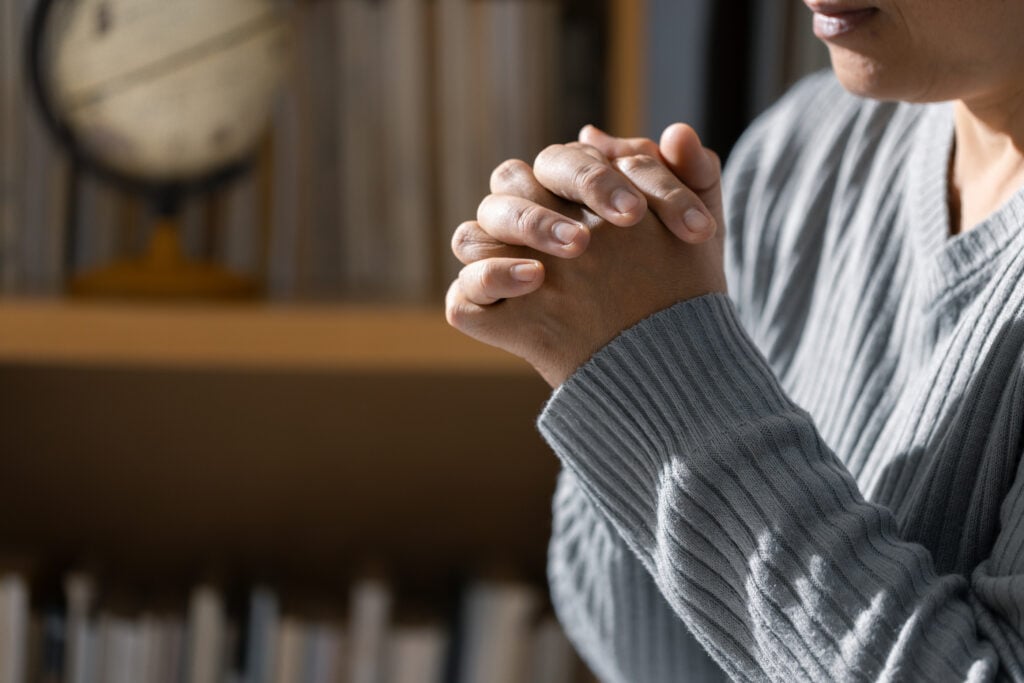
#1 – Pray continually.
“Don’t worry about anything, but in everything, through prayer and petition with thanksgiving, let your requests be made known to God. And the peace of God, which surpasses every thought, will guard your hearts and minds in Christ Jesus.” – Philippians 4:6–7 HCSB
God is the Creator and Ruler over all things. He is a miracle worker and loves us.
We can put all of our confidence in Him to take care of every situation.
God invites us to ask Him for what we need. When we do this, our burden becomes the onus of our Sovereign God.
This truth should lead us to thankfulness in prayer. As we think of God’s blessings in every situation and express gratitude for what we have in Him, we focus less on the cause of our worry or anxiety.
We can humbly turn circumstances over to God and experience an unexplainable peace that guards our hearts and minds.

#2 – Dwell on the things of God.
“Finally brothers, whatever is true, whatever is honorable, whatever is just, whatever is pure, whatever is lovely, whatever is commendable—if there is any moral excellence and if there is any praise—dwell on these things.” – Philippians 4:8 HCSB
We choose the focus of our thought lives. We can either dwell on anxious thoughts or think about things that are good and bring calm to our minds.
Proverbs 12:25 HCSB says, “Anxiety in a man’s heart weighs it down, but a good word cheers it up.” We can reframe our thoughts according to God’s Word, replacing anxiety-inducing thoughts with God-inspired ones.
Find Scriptures applicable to your situation. Write them down. Meditate on them.
Memorize them. Talk about them. Study them.
Over time, God’s Word can become an automatic response when worry or anxiety surfaces.
A “good word” can also come from someone else. Look for a person who can provide a word of encouragement and also be an example to follow.

#3 – Learn from a godly mentor.
“Do what you have learned and received and heard and seen in me, and the God of peace will be with you.” – Philippians 4:9 HCSB
Paul modeled what he encouraged the Philippians to do. He instructed and showed them how to deal with anxiety.
Paul had reasonable causes to be anxious. His life was threatened multiple times. He was imprisoned. He endured persecution.
God even allowed Paul to experience a thorn in the flesh—described as a messenger of Satan—to keep him from becoming too prideful (2 Cor 12:7).
Despite life-threatening environments, imprisonment, and torment, Paul lived at peace and full of joy. He preached redemption and grace and continued in the call God had on his life.
What faith and mental fortitude it took for Paul to focus his mind on the good things of God and to write such an encouraging letter to the Philippians! A letter that still encourages us in the present day.
Paul provides a great example of a godly mentor, but we can also find godly mentors in our local churches. Be on the lookout for a mentor who models a biblical lifestyle. Ask to meet up with her to study the Word, or grab a cup of coffee with the intention of gaining godly wisdom.

Rejoice and Calm Anxiety
“Rejoice in the Lord always. I will say it again: Rejoice!” – Philippians 4:4 HCSB
Paul’s instruction to rejoice preceded the three strategies for battling anxiety. Despite difficult circumstances, Paul displayed joy in the Lord and encouraged others.
Yielding to anxiety squashes our ability to live freely in the call of God upon our lives.
When anxiety or worry arises, pause and rejoice in who God is and in the gift of His Word.
Let’s follow Paul’s example by rejoicing and using the anxiety-calming tools—praying, dwelling on the things of the Lord, and learning from godly mentors.
As we “do what we’ve learned,” may we experience the peace of God.
Jamie Baker-Douglin

Jamie is a lifelong believer. She loves the Lord and is a Christian writer and podcaster. She enjoys serving in the Worship Arts Department and the Children’s Ministry in her church. Alongside her husband, she also leads a small group for married couples. Additionally, she is grateful to serve in a local moms group. Connect with her at her website: momsfaithandhealth.com.