



He couldn’t love me well.
His attempts left me emotionally bruised and bleeding more times than I could count. He said he loved me—and he thought he did—but whether he lacked the skill or the understanding, I was always left shattered and feeling unmistakably unloved.
After decades, I severed the relationship.
It was difficult, but necessary for healing to begin.
It doesn’t take long in the human experience to learn love is more than a feeling, more than something that can be found and held, controlled or lost.
When we’re loved well, we receive affection, security, and identity. When we offer our love to others, we gain intimacy, friendship, and community.
When we’re not loved well—or fail to love others as we ought—our lives become inundated with insecurities, pain, and a lethargy we struggle to diagnose as loneliness.
We love because Christ first loved us (1 Jn 4:19).
Created in God’s image, we were made to love and to crave love. It’s a value no other creature can articulate. The animal kingdom cares for their offspring, but that care is nothing more than preservation in creatures without a soul.

What is Love?
Love is more than a preserving—it’s a promise, a reciprocity of trust that touches deeper than the surface. It’s known by our attractions, shown in our actions, heard in our interactions, and embedded in our affections.
In Paul’s first letter to the Corinthian church, he explains exactly what love should be—an outpouring, not a receiving.
Proper love looks like putting others first and prioritizing the truth. Forgiving and forgetting wrongs. Staying the course (1 Cor 13:4–7).
All of our good deeds fall short if they don’t come from love. All we speak and do as Christians must spring from our love; otherwise, it’s vanity (1 Cor 13:1–3).
But that’s just part of the problem.

Understanding Love as Christians
In Christ, we’re given the picture of perfect love. Better than a picture—a promise.
The entirety of the scriptures explains the extent of God’s love for His children, how He orchestrates history and events to rescue us from the pitiful fate we chose in the Garden of Eden and continue to choose every time we sin.
God’s plan of redemption came by His divine love—boundless and pure.
But we continue to place limits upon the love of our limitless God.
We confuse Christ’s love for the love we’re most often exposed to, love that comes with strings and mutual exchange. This is what “knowing in part” looks like: “For we know in part and we prophesy in part, but when completeness comes, what is in part disappears” (1 Cor 13:9–10 NIV).
We understand love only in part as a fallen creation.
God knew His children would struggle with this paradox of love, born of hearts polluted with sin. He knew how humanity would flounder and falter at loving one another with the same love He showed us. He knew our desire to express love and connection would become adulterated by fleshly desires.
He sees us use and abuse one another for self-gratification, making a mockery of what love is meant to be.
God sees this behaviour in His bride—His church—and it’s devastating.
Paul’s definition of love addressed to the Corinthians comes directly after his teaching on the Church as one body (1 Cor 12:12–31). Just as the body has many members that make up a whole, Christ’s Church is one body with many functions serving one purpose. Christ’s love should flow freely and widely through His people and be at its finest among His family.
Sadly, we often don’t get it right. The love we receive and offer is often deeply flawed and only a small reflection of what true, pure, abiding love is.
Right now, we know love only partly, but completeness is coming.
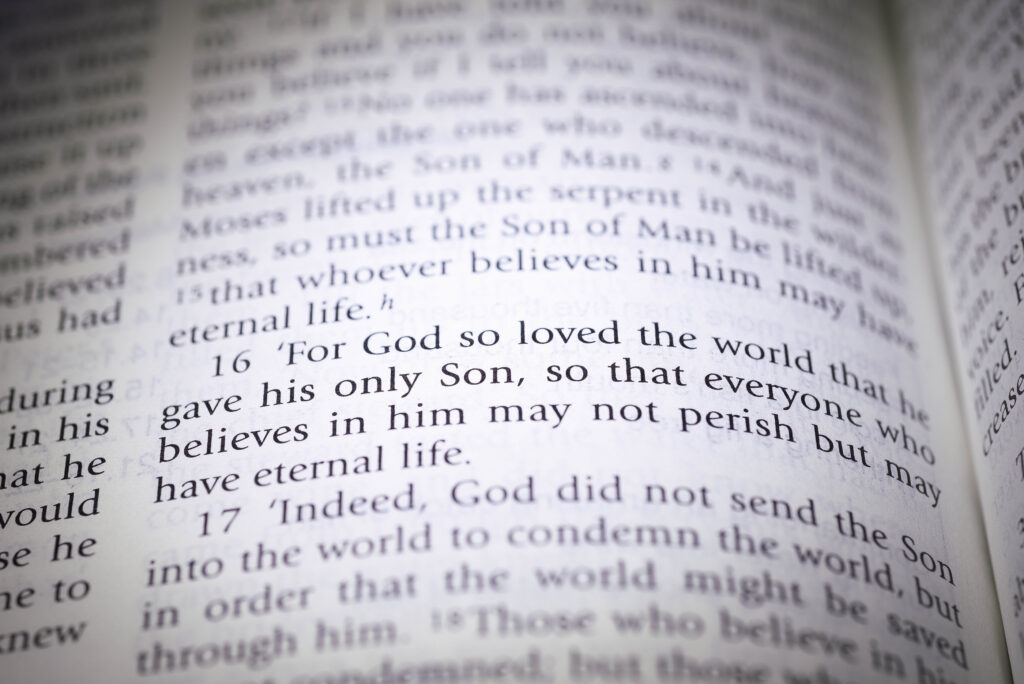
Fully Known and Loved by God
God’s grace grants us a glimpse into His beautiful love and calls us to repent: “For now we see only a reflection as in a mirror; then we shall see face to face. Now I know in part; then I shall know fully, even as I am fully known” (1 Cor 13:12 NIV).
One day, when we bow in the presence of Jesus, we will fully know the complete and perfect love of God.
Such love is too lofty for our mortal minds to comprehend.
We will struggle to fully know the depth of Christ’s love on this side of Heaven. But glory awaits where the King sits on His throne, who has loved us with such enormity that He condescended to live among us and suffer a criminal’s death in our place.
Only the purest love could accomplish this.
Completeness came at the cross, but we only caught a glimpse.

Knowing God’s Love
One day, we will know what it’s like to be completely treasured.
Sometimes I grieve my lost relationship, but not for my sake anymore. I feel pity for this person who seems lost to the depth of love we can have in Christ.
Yet, God holds his story just as He holds mine.
Our lives may no longer intertwine, but I can forgive the wrongs, forget the painful details, and hold on to the truth that God isn’t done working. Christ will carry to completion the good work He began (Phil 1:6).
God sees and knows the whole from Genesis to Revelation. One day, we shall experience the full depth of God’s love, completely known and cherished by our beloved Savior.
Rachel Greening

Rachel Greening writes to reflect the beauty of God and exalt Him above all things. She has written for various publications, including Risen Motherhood, The Gospel Coalition, Motherly, The Truly Co, Just Between Us Magazine, and more. She joyfully belongs to Hope Bible Church in Oakville, Ontario, where she works and serves with her family. Connect with her at rachelgreeningwrites.com.